Repeat an outfit without making it feel identical
Start with the parts of a combination that already do their job: shoes that suit the route, trousers you can sit in and a top that works in the weather. Keep the reliable parts and vary one visual element. It is easier to see which changes you enjoy when the rest of the outfit stays familiar.
Use one base for two versions
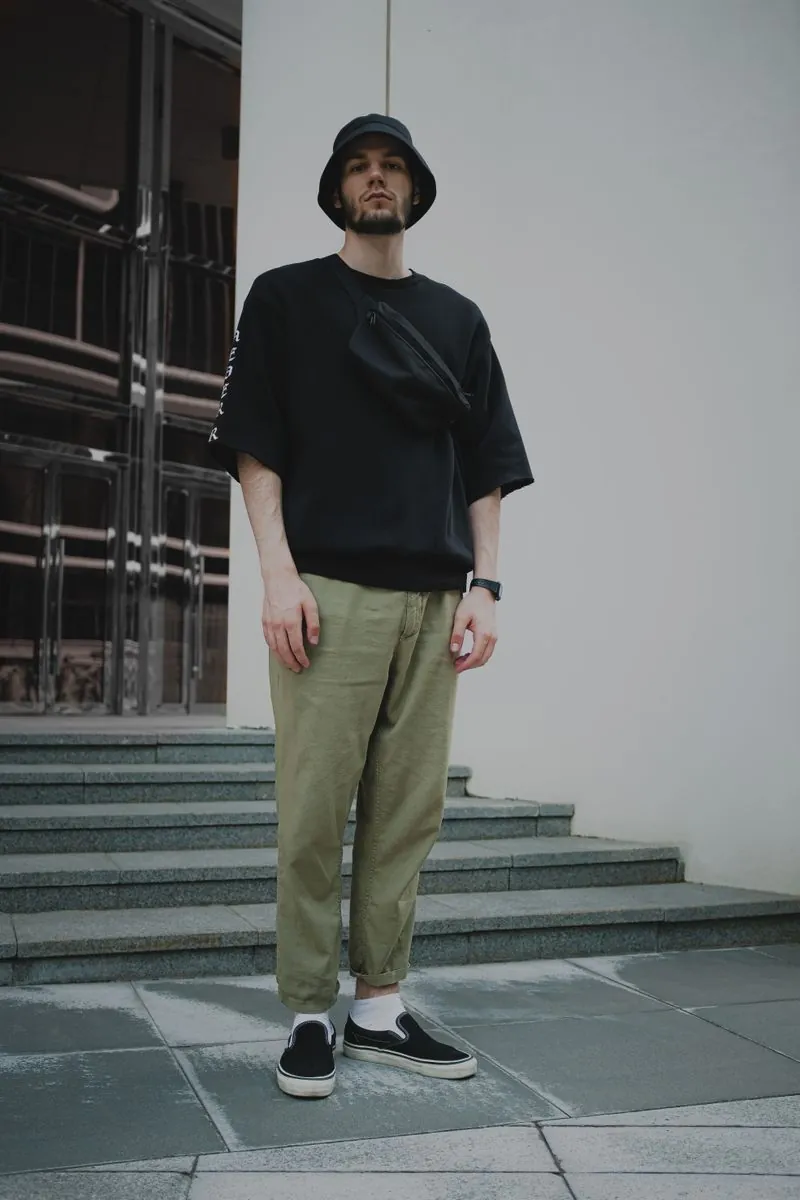
Take the loose tee, olive trousers and sneakers in the photograph as one example. For a quieter day, use a plain tee and a simple bag. For an outing, try a different tee color or a patterned layer if the weather allows. If you want more polish, swap the tee for a collared shirt in a suitable weight. Keep the shoes if they still suit the plan.
Make the swap specific
A belt or a jacket can change the look, but a change is only useful if you can wear it for the whole day. Try the replacement with the actual trousers and see whether it changes the fit at the waist or shoulder. If you cannot tell why the new version feels off, return to the base and try one different piece instead of changing everything at once.
Save two useful names
Use names such as “Olive trousers for errands” and “Olive trousers for lunch.” Record the one swap in each. A short list of tested variations makes it easier to repeat what works and still decide how you want to look that day.