

Check light-colored clothes in daylight
A pale shirt or trouser can look opaque in a bedroom and different by a window. Check it with the underlayers you plan to wear and at the angles that matter to you. Opacity is a garment and lighting question, and the amount of coverage you want is personal.
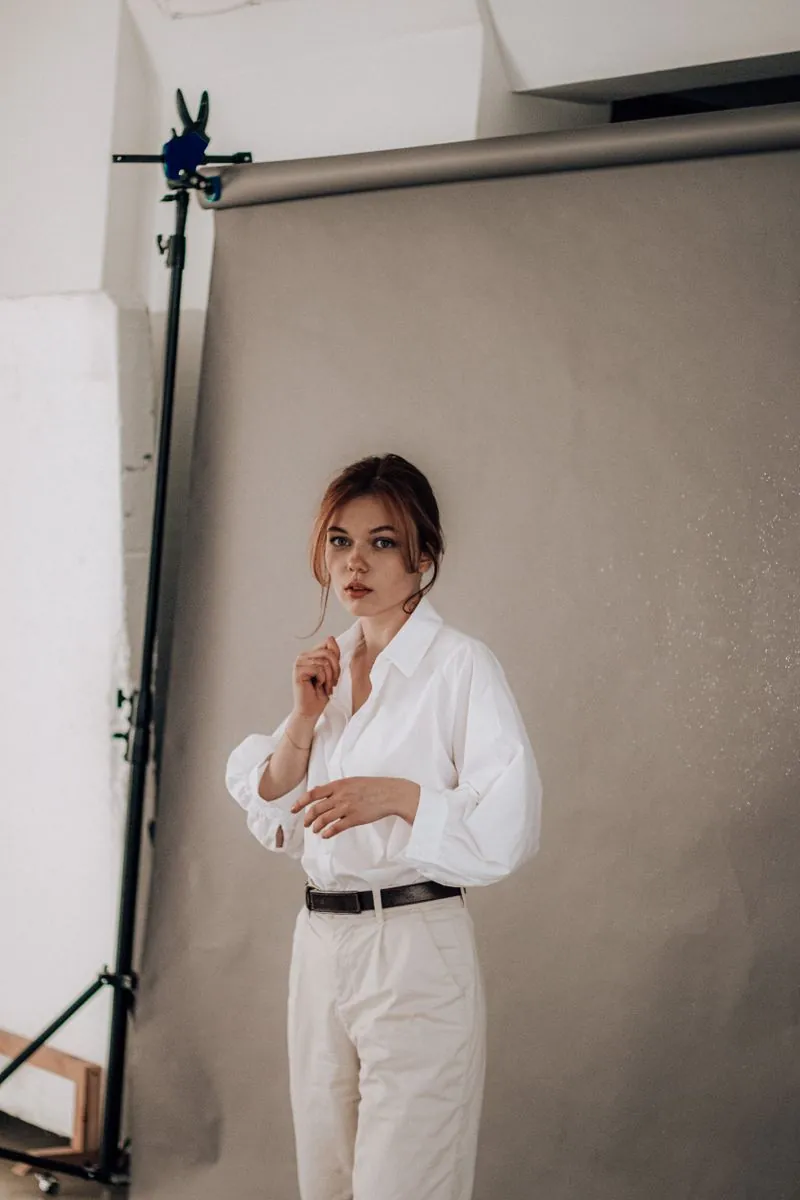
Test the outfit as worn
Try the full outfit, including any belt and the actual underlayers. Stand near a window, then turn so the light comes from behind and from the side. Sit and bend slightly; fabric may become more transparent where it stretches. If you want a second opinion, use a mirror or take a private photo in the light where you expect to wear it.
Adjust the smallest piece that solves the issue
For a shirt, try an underlayer that gives the coverage you want and does not add too much warmth. For trousers, check the pocket lining and fit: more room or a denser fabric may change how the cloth reads. If a second layer makes the outfit too hot, choose a different shirt or bottom. You can still use the warm-white palette with a slightly darker piece.
Test comfort after the change
Sit and walk in the new combination. Watch for a second layer rolling, showing at the edge or clinging. A pale outfit is useful when you can wear it as planned without worrying about the light or constantly correcting it.