

A practical test for tucked and untucked shirts
A tuck changes where the shirt sits and what happens when you move. Try it with the actual trousers or skirt, because the rise and waistband matter as much as the shirt length. Pick the version you can wear for the whole day without constant readjustment.
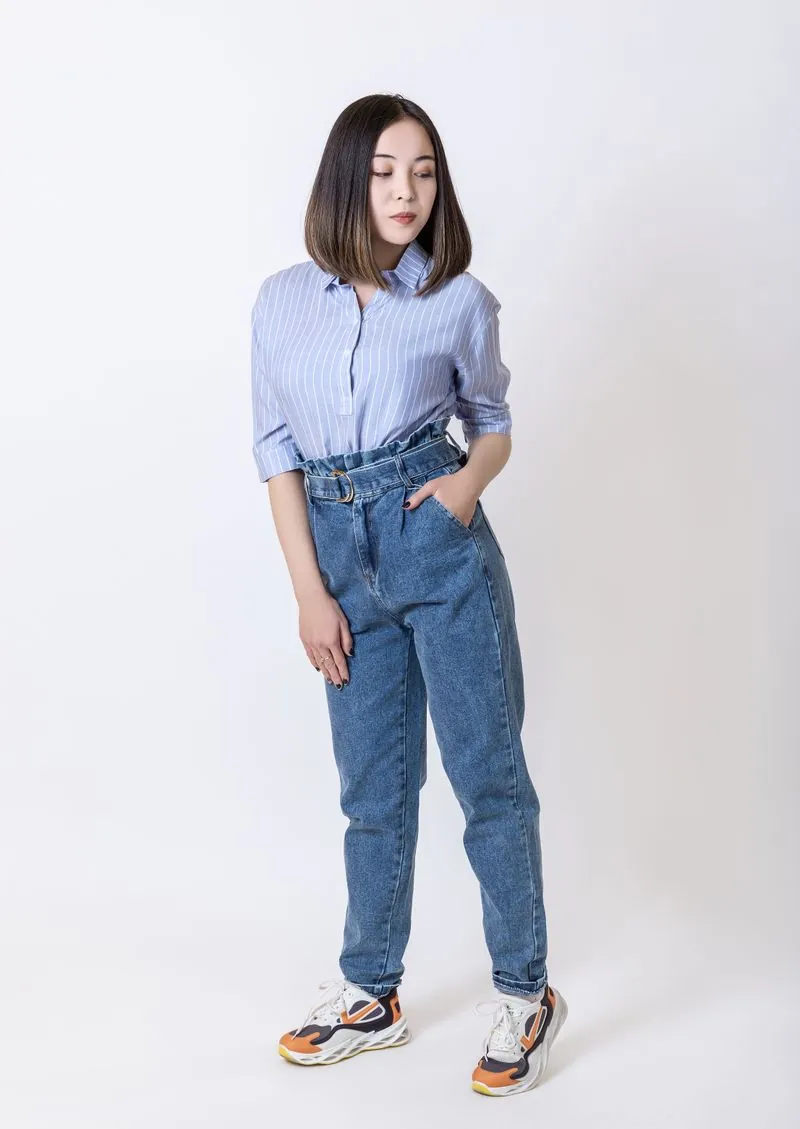
Compare three versions with the same base
Start fully untucked. Check that the hem does not get trapped when you sit and that its length suits the setting. Then try a full tuck and check for fabric bunched under the waistband. A partial tuck can leave room at the sides, but see whether it pulls out when you reach. Keep the shoes and layer the same while you compare so you can see what the tuck itself changes.
Watch where the fabric moves
Lift your arms and bend forward. If the shirt comes loose or pulls at the shoulders, you may need a longer shirt or more room at the waist. A bulky knit may be more comfortable untucked; a lighter shirt can sit more smoothly under a fitted waistband. For a stricter dress code, use the required version and choose a shirt cut that works with it.
Save the useful detail
Note which shirt and bottom you tested together. “Pale blue shirt untucked with dark straight trousers” is more actionable than a rule about when to tuck every shirt. Use that note the next time you plan a similar day.